Sunday, May 18, 2025

Meeting and Events in the Week Ahead

In the week that leads up to Memorial Day weekend, there is a meeting happening every day.
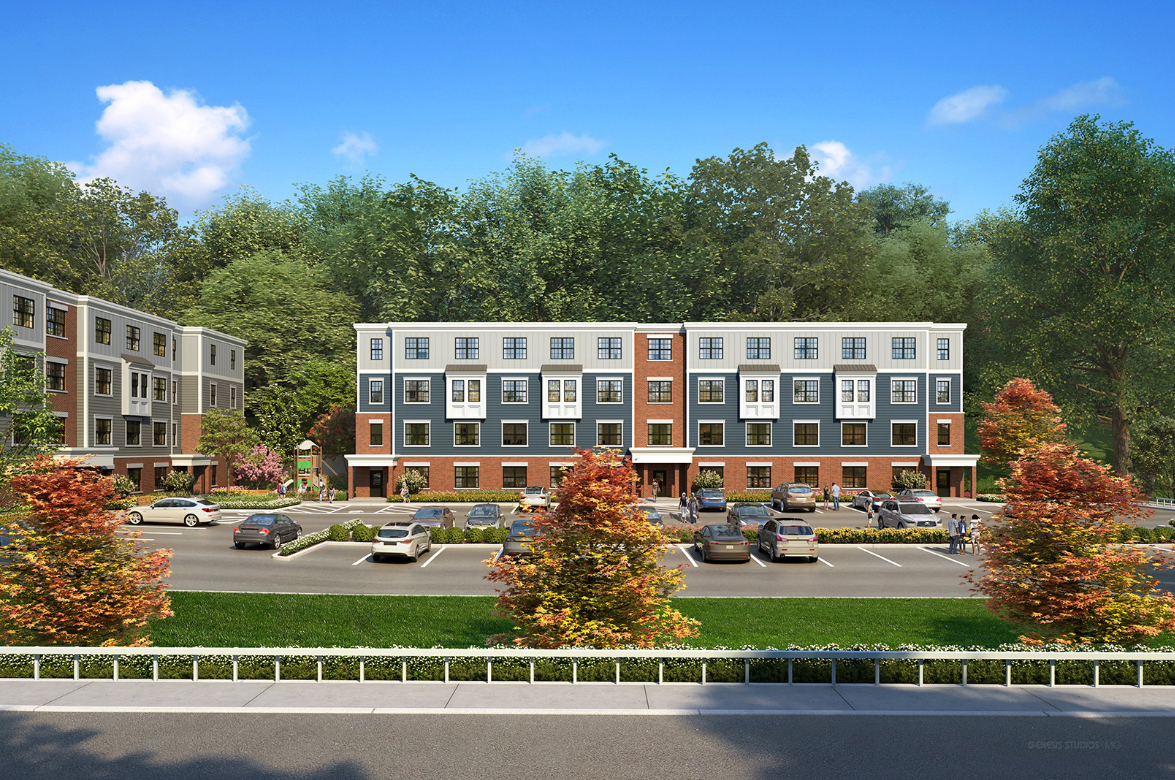
  • On Monday, May 19, the Hudson Housing Authority Board of Commissioners meets at 6:00 p.m. At the Planning Board meeting last week, we learned that the height of the two buildings that are part of Phase 1 of the HHA redevelopment plan has been reduced from five stories to four stories and the shape of both buildings has changed from a simple rectangle to an L, to allow the buildings to have the same number of units. We also learned that HHA plans to build three-story townhouses with five bedrooms on the lot at the corner of Columbia and Second streets, now the site of a community garden. More information about redevelopment plans may be provided at this meeting. The meeting is a hybrid, taking place in person in the Community Room at Bliss Towers and on Zoom. Click here to join the meeting remotely.
  • On Tuesday, May 20, it's the school district election. Voters in the Hudson City School District vote on approving the $58.5 million budget for the 2025-2026 school year and a $8.35 million capital project. They will also vote to elect three members of the Board of Education. The polls are open from 11:00 a.m. until 8:00 p.m. Hudson residents vote at the Central Fire Station, 77 North Seventh Street. Residents of Greenport, Stottville, Stockport, and Ghent vote at the Greenport Community Center, 500 Town Hall Drive, in Greenport. Residents of Claverack, Livingston, and Taghkanic vote at A. B. Shaw Firehouse, 67 Route 23, in Claverack. 
  • Also, on Tuesday, May 20, the Common Council Finance Committee meets at 5:15 p.m. The meeting is a hybrid, taking place in person at City Hall and on Microsoft Teams. Click here for the link to join the meeting remotely.
  • At 6:00 p.m. on Tuesday, May 20, the Common Council holds its regular monthly meeting. The meeting is a hybrid, taking place in person at City Hall and on Microsoft Teams. Click here for the link to join the meeting remotely.
  • On Wednesday, May 21, the Zoning Board of Appeals meets at 6:00 p.m. The meeting, which takes place in person only at City Hall, will involve a public hearing on an application for the area variances needed to build a 340 square foot addition to the rear of 250 Allen Street, a building that was owned by Galvan from 2011 to 2024.  
  • On Thursday, May 22, Hudson Community Development and Planning Agency (HCDPA) meets at 5:00 p.m. The meeting is a hybrid, taking place in person at City Hall and on Microsoft Teams. Click here for the link to join the meeting remotely.
  • On Friday, May 23, the Historic Preservation Commission meets at 10:00 a.m. The agenda for the meeting is not yet available, but it is possible the HPC may be taking a second vote on the proposal to put an internally illuminated sign on the side of 251 Allen Street, now the location of the Hudson Navigator. The meeting is a hybrid, taking place in person at City Hall and on Microsoft Teams. Click here for the link to join the meeting remotely.
COPYRIGHT 2025 CAROLE OSTERINK

Update: Mill Street Lofts

At the April meeting of the Planning Board, consulting engineer Chris Bertram told Andy Learn, the engineer for the developer, "You need to prove to us and prove to me that that amount of water is not going to negatively impact the downstream neighbors on Mill Street."


Learn responded to Bertram's request by submitting a flood analysis on May 2, but at the Planning Board meeting on May 13, Bertram said there had not been sufficient time to review what had been submitted. On Friday, May 15, however, the review of the flood analysis by the Barton & Loguidice was sent to the Planning Board. Interestingly, the letter did not come from Chris Bertram, the Barton & Loguidice engineer who works with the Planning Board, but from another B&L engineer, William Buckman. The letter reports these findings:
    • The CPL report adequately demonstrates that the project will not increase downstream flood risk.
    • Modeling and grading plans support the conclusion that the development will not worsen flooding on Mill or North 2nd Streets.
    • Regulatory requirements have been met, including those for floodplain compensation and stormwater controls.
    • The Empire State Trail may serve as an acceptable emergency route, though B&L also recommends formal confirmation.
The letter concludes:
Based on CPL's flood analysis and B&L's independent review, we find the applicant has sufficiently demonstrated that the Mill Street Lofts project, as proposed, will not result in adverse flood impacts to downstream properties. The stormwater design complies with regulatory requirements, incorporates floodplain mitigation, and provides resilient infrastructure for site access and runoff conveyance,
We recommend the Planning Board consider these findings in deliberations regarding the site plan application.
The entire letter can be found here.

Saturday, May 17, 2025

Of Interest

A reader brought this to my attention today. It's an interview that happened months ago, in October 2024. I found it interesting, and I thought Gossips readers might, too.


In this thirty-minute Facebook video, which can be found here, Dr. Dorcey Applyrs, chief city auditor for the City of Albany, interviews Hudson mayor Kamal Johnson and Michelle Tullo, Hudson's housing justice director, about the state of housing in Hudson. Applyrs is now a candidate for mayor of Albany.

Friday, May 16, 2025

The State of the Planning Board

In his latest post on Instagram, mayoral candidate Peter Spear talks about the Planning Board, the changes he would make to how Planning Board members are selected and trained, and his recommendation that the Planning Board retain a professional urban planner along with its attorney and engineer. Spear's post can be accessed here.

Photo: 542films
Spear starts out by saying there is a vacancy on the Planning Board. Actually. there isn't. The Planning Board now has its full complement of seven members, although at the public hearing on May 6 and at the most recent Planning Board meeting on May 13, only four of the seven members showed up.  

The Planning Board may soon have an vacancy, however. Ashraf Chowdhury, who was appointed to the Planning Board in February, has never attended a meeting. It seems soon after he was appointed, sworn in, and assigned a City of Hudson email address, his work schedule shifted to nights, making it impossible for him to attend meetings. Allegedly, Mayor Kamal Johnson is waiting for Chowdhury to submit a letter of resignation before he can appoint someone to replace him. For anyone interested in serving on the Planning Board, it would probably not be inappropriate for you to express your interest to the mayor now.
COPYRIGHT 2025 CAROLE OSTERINK

Let the Voters Decide

As expected, the Common Council failed to act on the petition for a charter amendment that would change the form of Hudson government from mayor/council form of government to city manager/council. As a consequence, the charter change initiative is moving forward to put the proposal on the ballot in November as a referendum question. The following press release was issued this morning:
The Hudson Charter Change campaign rolls into its second phase this week. Volunteers will be at the Farmers Market this Saturday seeking signatures on the petition to place the initiative on the November ballot. 
The first petition was signed by 240 Hudson voters and presented to the City Clerk on Wednesday, March 5. The clerk verified the signatures and presented the documents to Council President DePietro two days later, on March 7. That started a sixty-day period for the Common Council to study and discuss the proposal. 
Three days later, Council President declared, “I have no intention of putting it on the agenda for a number of reasons I have discussed with Crystal.” (Crystal Peck, legal counsel to the Common Council) 
Subsequently, the sixty-day period for our elected representatives to consider the changes to the city charter elapsed with no action. Apparently, Council President DePietro and members of the Council trust and respect the voters, their constituents, to make this decision for them. We do not intend to disappoint them! 
We now seek 102 signatures, the threshold set by state statute, on a second petition. With those signatures, the proposed charter changes will be on the November ballot. Thus, on November 4, 2025, we shall let the voters decide. 
To join fellow voters in this effort, visit our volunteers at the Farmers Market each Saturday morning, or welcome our volunteers when they knock on your door.

Back to the Dock

On May 6, the Planning Board closed the public hearing on Colarusso's conditional use permit for its dock operations but agreed to accept written comments until May 30. It is not certain when the Planning Board will be taking up the issue again. The special meeting of the Planning Board has been scheduled for May 29, but the agenda for the meeting does not, appropriately, include the dock. 


In the meantime, Our Hudson Waterfront has issued this press release, calling for the Planning Board to reopen the public hearing.
PLANNING BOARD IGNORES OWN RULES; SHUTS OUT PUBLIC
At the May 6 hearing on A. Colarusso & Sons' Conditional Use Permit for the dock, four of six Hudson Planning Board members voted to close public hearing--despite multiple requests to keep it open and before:
    • Conducting a proper review under the City Zoning Code.
    • Clarifying the full scope of review (which must include all dock operations).
    • Receiving any response from the applicant regarding concerns raised.
Why Hearing Must Be Reopened
By closing the hearing, the Planning Board may have triggered a 62-day decision deadline under City Code §325-35.H.3(b), potentially rushing a decision that will shape Hudson's waterfront for decades. The board and public were not informed about this at any time during the meeting. Also the board failed to raise any concerns, comments or questions of the applicant (contrary to the hearing notice), nor did they request a response from the applicant before hearing closure.
This review should not be hurried. The Board must (at a minimum):
    • Conduct a full, thoughtful review under 30+ applicable Zoning Code ordinances.
    • Review hundreds of public letters.
    • Require the applicant to respond to all public and board concerns.
    • Ensure the waterfront remains a shared, people-centered space--not a heavy truck route.
Given the long-term impact to our waterfront, city, and economy, the public (including key stakeholders) deserves a continued formal role in a transparent process; the hearing should be reopened.
The hearing was notably more civil than in past years, marked by a shared intensity and vulnerability in the public's pleas for the board to give the matter proper attention. Speakers respectfully yet passionately voiced the need for strong conditions to ensure industrial operations coexist responsibly and in harmony with nearby waterfront businesses, the park, and the broader values of a city that treasures its waterfront, its residents, and its future.
Board Decision-Making and Leadership in Question
Chair Joyner pushed to close the hearing despite members expressing hesitation or wanting applicant responses. New member Veronica Concra, unsure and uninformed, was pressured to cast the deciding vote.
Joyner emphasized to the public that "a lot" of comments have been received, and inaccurately claimed "everybody here than came has sent in something, everybody," seemingly dismissing the need for further public comment.
Public Hearing Process Was Not Followed
The official public hearing notice stated that after the applicant presentation, board members would voice their concerns, comments and ask questions, and then the public would do likewise. Although the public was asked to speak, and they did for over 90 minutes, the board voiced no concerns.
Board Chair and counsel did not inform board members, or the public, about the 62-day decision clock. Regarding the applicant's response to the public's concerns, Victoria Polidoro (Board's counsel) advised that the applicant can respond before or after the hearing closes. Applicant's attorney T. J. Ruane claimed, "typically you wait until it is closed, and we make a response to all comments at once." Chair Joyner followed this suggestion by saying "Right," and then called for a vote to close the hearing without seeking further input from board members or counsel.
This deference to a historically evasive and sometimes deceptive applicant is unacceptable--especially since current and previous boards routinely keep application hearings open throughout deliberations, insist on applicant engagement, and allow public comment throughout.
Lack of Transparency and Accessibility
The May 6 hearing was held in a cramped space with insufficient seating, no virtual access, and poor sound quality. Although the board recorded and live-streamed the meeting, the public was not informed in advance of meeting.
Many attendees were forced to stand, and most could not hear the board or public speakers--board members did not use a microphone, and the speaker mic was inadequate. It's unclear if the board could even hear the speakers. Additionally, limited space prevented the public from displaying informational poster materials intended for the board to see.
This--as a whole--reflects poor planning and underscores the crucial need for reinstatement of hybrid meetings, the need to hold future meetings in a more accommodating space, and to provide an adequate sound system for the board and speakers. Board meetings must be transparent, and the public should not be shut out.
Inexperienced Board Lacks Context
Only one current member served during the 2019-2020 hearings. Three others were appointed in the last six months--one hasn't yet attended a meeting.
Widespread Public Opposition Ignored? Public in the Dark
More than 80 people attended the May 6 hearing. Nearly 300 comments have been submitted since 2019, including 80 thus far this year (click here for 2025 comments). Over 1,000 signed a petition in 2019 opposing the permit.
Recent letters from Our Hudson Waterfront (click here), the Valley Alliance (click here) and others, pose specific conditions (e.g., limits on truck volume and other concerns).
The public has long raised concerns about traffic, pollution, health, safety, and economic harm--consistent with Hudson's decades-long fight to reclaim and deindustrialize the waterfront from expanding gravel trucking and shipping operations.
As one letter put it (paraphrased): "Board members must uphold Hudson's vision--one that prioritizes public use and ecological value--and serve the long-term public interest."
Yet now, the public is shut out and in the dark. The hearing is closed and there's no transparency on the board's review scope, deliberations, or the applicant's responses. This is unacceptable. The hearing should be reopened.
What You Can Do
Email the Planning Board by May 30 to urge them to reopen the public hearing, and reinstate hybrid meetings. Send comments to Board Secretary at: lfenoff@cityofhudson.org.
These decisions will shape Hudson's waterfront, economy, and quality of life for decades. The public must be heard--before it's too late.

February in June

The Register-Star reports this morning that our new, very expensive comprehensive plan will be late: "Hudson's draft comprehensive plan delayed until June."

According to the original schedule for the comprehensive plan, which can be found here, the draft plan was due in February 2025, and the final plan was to be completed by April 2025. 


In commenting on the delay, Melissa Lee, principal of Public Works Partners, the consulting firm doing the Comprehensive Plan, said her group "was ensuring that the draft plan would fully align with the city's goals, and the goals of city residents." The article quotes the mayor's response to the delays:
Hudson Mayor Kamal Johnson said Thursday the draft of the comprehensive plan was in its final stages, and will be shown to the plan's steering committee first.
"Then it will be presented to the [Common] council and everyone else," he said. "It's pretty much finished, it just needs all the key stakeholders to look it over. It'll be available soon."
One wonders who the "key stakeholders" are. The names of members of the steering committee can be found here.
COPYRIGHT 2025 CAROLE OSTERINK

Thursday, May 15, 2025

Preserving Hudson's Oldest Trees

In 2011, Gossips did a series of posts called "Showcasing Hudson's Great Trees." The London plane trees on Green Street, shown in the picture below, were included in that series. Fourteen years later, of the fourteen trees featured in those posts, nine remain. 


Concern for the great trees of Hudson--the heritage trees, trees that have stood for more than a hundred years--brought Peter Meyer to the Conservation Advisory Council (CAC) on Tuesday, April 6, with a proposal he is calling "Adopt-a-Tree." Meyer began his presentation to the CAC by making reference to the tree inventory done in 2022. When the inventory was done, there were 1,739 trees in Hudson, and, as Meyer explained it, the tree "demographic" was similar to the human demographic when came to age. He noted that the "senior citizens" of trees are better for the health of the community than younger trees and urged that the CAC start paying attention to senior trees. 

Meyer's "Adopt-a-Tree" plan would be a means for citizens to donate money to be used for the care of designated trees. In his proposal, Meyer describes the process for designating trees to be part of the program in this way:
The CAC shall identify 100 heritage trees (those determined to be over 100 years old) within the City Limits and then invite a class of 5th or 6th grade students from the Hudson City School District to choose the most deserving 50 trees based on essays the students have written about their favorite trees. Ownership rights should not be an issue during this first phase of the program, but once chosen as an Adoptee Heritage Tree, the "owner(s) of the tree" (as defined by the CAC) shall be invited to join the program (a plaque and letter from CAC would be part of the agreement/award), with a list of these trees included in official CAC records and documents.
Meyer's full proposal can be found here.

In the discussion that followed Meyer's presentation, after he had left the room, Rich Volo, who chairs the CAC, noted that many of the trees defined as "heritage trees" were on private property and asserted, "Our charge is public trees." CAC member Arone Dyer suggested the protection and preservation of heritage trees could be part of the tree ordinance. (The CAC has been working on a tree ordinance for quite a while now, and the latest iteration of the tree ordinance is reportedly now with the Common Council Legal Committee.) CAC member Michael O'Hara, who told his colleagues the purpose of Meyer's proposal is "to preserve mature trees from neglect and destruction," summarized, "At a certain point, it becomes in the community's interest to preserve a tree that is on your property."
COPYRIGHT 2025 CAROLE OSTERINK

News from RUPCO

There are many initiatives currently being pursued to create more rental housing in Hudson--facilitating construction of ADUs, HHA's redevelopment plan to double its units, the Galvan and Kearney projects. Now there's another program to assist in getting more rental units on the market: RUPCO's Vacant Rental Program.


The program is meant to help owners of rental properties bring vacant units and spaces in small-scale properties back into productive use as affordable long-term rental units. Eligible applicants can receive grants of up to $75,000 per unit. In exchange for funds, landlords must agree to keep rents affordable for up to ten years.

There will be an information session about the program on Thursday, May 29, at 5:30 p.m., on Zoom. For more information and to register for the information session, click here.

Meet the HCSD Board Candidates Tonight

Tonight at 6:00 p.m., the Hudson High School Student Council is hosting "Meet the Board Candidates Night."


The event, which will be moderated by members of the Student Council, takes place in the Hudson High School auditorium and will be livestreamed on the HCSD YouTube page.

What Is "Workforce Housing"?

The Galvan Foundation was granted a PILOT (payment in lieu of taxes) and other tax abatements for 76 North Seventh Street on the premise that the building was to provide "workforce housing." Workforce housing seems to be something of a weasel term, not clearly defined anywhere. For 76 North Seventh Street, it seems to mean affordable to households with incomes between 80 and 130 percent of the area median income (AMI). The apartments, currently being leased with rents ranging from $1,569 or $2,275 to $3,600 a month, have been marketed in a manner that seems meant to appeal to Millennials and Gen Z.  


Crosswinds at Hudson is also defined as "workforce housing." By contrast, its marketing brochure can be found here 


According to the brochure, which is dated May 22, 2024, rents range from $825 for a one-bedroom apartment to $1,005 for a three-bedroom unit. The brochure also specifies maximum income limits and minimum income requirements to qualify for an apartment at Crosswinds. Those seeking an apartment at Crosswinds must submit with their application copies of the following: birth certificates for all household members; Social Security cards for all household members; the applicant's driver's license. 

On a separate but related issue, on Tuesday, Gossips drew attention to a comment about 76 North Seventh Street made by Eric Baxter, vice president of Baxter Construction Management, and quoted in the Times Union
The apartments will initially be marketed and rented to people in the AMI brackets, Baxter Vice President Eric Baxter said. He called renting to these people the "priority," but said the rentals will be opened up to people of any income level if they are not snatched up by the intended groups.
At the Planning Board meeting on Tuesday night, representatives of the Galvan Foundation presented some alterations to the original design for landscaping and for the creation of a 64th unit in the building. In making the presentation, Charles Gottlieb, attorney for Galvan, told the Planning Board, "Applications are still coming in for affordable units, market rate units. . . ." His statement is worthy of note, because there aren't supposed to be any market rate units in the building. Of course, it's possible Gottlieb simply misspoke. He did tell the Planning Board that the building's address used to be 708 State Street and it was now 76 State Street.
COPYRIGHT 2025 CAROLE OSTERINK

Wednesday, May 14, 2025

What Oft Was Thought . . .

In a post on Instagram today, Peter Spear, who is running for mayor on his own Future Hudson line, offers his review of last night's Planning Board meeting and calls for the resignation of Planning Board chair Theresa Joyner. 


Spear's Instagram post can be found here. Last night's Planning Board meeting, all close to three hours of it, can be viewed here.

About the Tennis Courts at M. C. Smith

Last week, motivated by the news that part of the $8.35 million capital project being proposed by the Hudson City School District is to "reconstruct" the tennis courts at Montgomery C. Smith, Gossips published a piece by Ken Sheffer that recounts how the courts were built in the 1930s as part of the 28-acre Chancellor Robert R. Livingston Educational Center, celebrates their importance, and contemplates their future: "Construction, Deconstruction, 'Reconstruction' or Destruction--What Is Actually Planned for Hudson's Tennis Center?" That piece inspired a lot of interest from people who share Sheffer's passion for tennis and devotion to those historic tennis courts.

Yesterday, there was a HCSD Facilities Committee meeting, and Sheffer was there to advocate for the tennis courts. This morning, he submitted a report on what happened at the meeting in the form of a comment on his original essay about the tennis courts. Click here and scroll down to read what he had to say. It's the last comment and begins: "Dear fellow tennis nuts."

Tuesday, May 13, 2025

Water, Water, and Mill Street Lofts

At the April meeting of the Planning Board, concerns about flooding were the major topic of discussion. What happened at that meeting is recounted in this post: "Return to Mill Street." At the end of that meeting, Chris Bertram, consulting engineer for the Planning Board, told Andy Learn, the engineer for Kearney, "You need to prove to us and prove to me that that amount of water is not going to negatively impact the downstream neighbors on Mill Street."


On May 2, Learn submitted a flood analysis to Theresa Joyner, chair of the Planning Board. The analysis concludes:
The results of this drainage analysis confirm that the existing City owned drainage system is undersized, resulting in overflow on to the subject property. The proposed design attempts to compensate for the lack of capacity in the City drainage system by providing a new conveyance system that exceeds the capacity of the existing drainage system by over 300%.The proposed drainage channel has been designed to match the performance of the existing undeveloped site without further impacting downstream properties. This analysis confirms that the flow rate entering and exiting the site remains unchanged from current (existing) conditions to developed (proposed) conditions. It also confirms that the drainage channel has adequate capacity to safely convey flow from the upstream watershed through the site without impacting the proposed development. The parking lot and buildings will remain safely above the BFE [base flood elevation] as well as the maximum water level in the drainage channel. As described in the SWPPP [Stormwater Pollution Prevention Plan], the project will not result in an increase in runoff leaving the site. Finally, given that the analysis shows that the flow rate in the stream before and after construction remains unchanged, the project will not contribute to or worsen existing flooding conditions in the surrounding area.
It appears the flood analysis provides no information that has not already been provided to the Planning Board, so it is not clear if it will be sufficient to convince Bertram that the project will have no negative impact on the downstream neighbors when it comes to flooding.  

The issue of Mill Street Lofts and flooding was taken up this morning on Instagram by Hudson Common Sense


What this observer of Hudson has to say about the situation can be found here.

The Planning Board meeting takes place tonight at 6:30 p.m. at City Hall. It will not be a hybrid meeting, but the notice of the meeting provides this information: "The meeting will also be livestreamed on YouTube at Hudson City Zoom Meetings for those who choose to listen but not participate." Click here to access the livestream.
COPYRIGHT 2025 CAROLE OSTERINK

Galvan in the Times Union

Roger Hannigan Gilson has an article in the Times Union today about 76 North Seventh Street: "Hudson Depot Lofts accepting applications for mixed-income apartments." 

Photo: Will Waldron | Times Union
The article is an assembly of information already reported by Gossips and the Register-Star, but there is one new, intriguing bit of information. This paragraph is quoted from the article:
The apartments will initially be marketed and rented to people in the AMI brackets, Baxter Vice President Eric Baxter said. He called renting to these people the “priority,” but said the rentals will be opened up to people of any income level if they are not snatched up by the intended groups.
Twelve of the 63 apartments are priced to be affordable to households with incomes up to 80 percent of the area median income (AMI), and the rest are priced to be affordable for households with incomes up to 130 percent of the AMI. (It is not known in which category the 64th apartment, being created in an unused space in the building, will be.) 

In 2021, the building was granted a twenty-year PILOT and other tax abatements based on the idea that it was to be "workforce housing," affordable to households with incomes between 80 and 130 percent of the AMI. Baxter's statement raises a number of questions: If the rentals are "opened up to people of any income level," does that violate the terms of the PILOT agreement? If so, what penalty would there be? How does the IDA (Industrial Development Agency) monitor what is actually happening with the rentals and pricing in the building to determine if it is in compliance with terms of the PILOT agreement?

The actualization of what started out as Mayor Kamal Johnson's "huge plan for housing" seems to be getting more disappointing every day. 
COPYRIGHT 2025 CAROLE OSTERINK

Monday, May 12, 2025

If at First You Don't Succeed . . .

One of the reasons Council president Tom DePietro gave for not putting the resolution opposing the Mill Street Lofts project on the agenda for tonight's informal Common Council meeting was that "it is a matter before the Planning Board and the Common Council should not opine on such matters." Mayor Kamal Johnson clearly has no such compunctions. Earlier tonight, Johnson posted the following on Facebook.


This post is reminiscent of how Johnson used Facebook to rally the troops to show up and try to influence a decision before the Common Council about awarding the contract for building the Ferry Street Bridge

Johnson's reference to the Depot District in this post conveniently overlooks the fact that the Deport District was his "huge plan for housing" touted in 2019 before he took office as mayor.

As a close observer of the Common Council and the machinations of city government for more than twenty years, I am at a loss to know what Johnson is talking about when he mentions a proposal for affordable housing that was rejected by the "City" Council years ago. My guess is he may be alluding to something that happened in 2006, when the Common Council did not support a PILOT for Crosswinds. The development was built without a PILOT, and, thanks to the efforts of many involved at the time, in particular Linda Mussmann, who brokered a meeting between the developer and members of the Common Council, it was redesigned to be architecturally compatible with its environment. Since 2010, Crosswinds has provided seventy units of affordable housing in Hudson. Recently, Galvan Housing Resources took ownership of the complex, so the future of those seventy units is uncertain.

Needless to say, tomorrow's Planning Board meeting may be a bit of a circus.
COPYRIGHT 2025 CAROLE OSTERINK

Concerning Mill Street Lofts

Mill Street Lofts is on the agenda for tomorrow night's Planning Board meeting. The word is the Planning Board will be closing the public hearing on the project at tomorrow night's meeting and starting the clock on reaching a decision about site plan approval.


This morning, three members of the Common Council--Rich Volo (Fourth Ward), Jennifer Belton (Fourth Ward), and Margaret Morris (First Ward)--submitted the following resolution to be added to the agenda for tonight's informal Common Council meeting. 
RESOLUTION OPPOSING THE MILL STREET LOFTS HOUSING PROJECT
WHEREAS The Mill Street Lofts project is in a flood plain with insufficient drainage and will increase flooding risk for existing homes on Mill Street; and
WHEREAS The Mill Street Lofts project does not offer its residents at least one parking space per unit, which will cause an overflow of on-street parking, making access for emergency vehicles and the Empire State Trail more difficult; and
WHEREAS The Mill Street Lofts project is located on land originally deeded for park and recreation, and
WHEREAS The Mill Street Lofts project is located on the habitat of a Threatened bat species; and
WHEREAS The Mill Street Lofts project does not fit the character of the other houses on Mill Street; and
WHEREAS The Mill Street Lofts project concentrates low-income housing within a few blocks of the City of Hudson which is not recommended by the City of Hudson’s approved 2018 Strategic Housing Action Plan prepared by the Hudson Valley Pattern for Progress; and
NOW, THEREFORE BE IT RESOLVED, that the Common Council hereby disapproves of the construction of The Mill Street Lofts project.
According to the Common Council Rules of Order, adopted by the Common Council at its organizational meeting in January 2025, proposed resolutions and laws can be put before the full Council for consideration if they are presented by three councilmembers. The following is Rule #4 Local Laws and Resolutions:
All Resolutions and Laws shall be submitted in writing at the Informal Session for discussion before submission to the Formal Session. This rule may be waived by the President of the Council when deemed necessary. Any matter, motion, proposed resolution or law introduced at the Informal or Formal Session, the President, at his sole discretion, may assign it to the appropriate ad hoc Committee(s), or place it on the Agenda for consideration by the Council. A petition by three members of the Council to the full Council will be sufficient to discharge a draft law or resolution and bring it up for consideration by the Council.
Despite this rule, when Volo, Belton, and Morris submitted the resolution this morning to Council president Tom DePietro for inclusion in the agenda for tonight's meeting, he refused to add it to the agenda, giving three reasons: it was due on Friday; it is full of misinformation; and it is a matter before the Planning Board and the Common Council should not opine on such matters.

Although the resolution is not on the agenda for tonight's meeting, it is very likely Mill Street Lofts will be a topic of discussion. The meeting begins at 6:00 p.m. at City Hall. Click here for the link to join the meeting remotely. 

Of related interest, mayoral candidate Peter Spear explains his opposition to Mill Street Lofts on Instagram today. Click here to listen to that statement.
COPYRIGHT 2025 CAROLE OSTERINK

Contemplating ADUs

At tonight's informal Common Council meeting, amendments to Chapter 325 of the city code to facilitate the construction of accessory dwelling units (ADUs) will be introduced. The amendments being proposed can be found here. The primary goal of the amendments is to make Hudson residents eligible for the grant program administered by RUPCO should that program be funded and offered again.

The amendments were discussed at the Common Council Legal Committee meeting last week, and some changes were made based on the discussion during the committee meeting. The amendments originally specified that an ADU could only exist as an accessory to an owner occupied principal dwelling. Councilmember Jennifer Belton (Fourth Ward) objected to that, imagining a scenario in which a homeowner had to relocate temporarily, with the intention of returning, but during that time rented out the principal dwelling. If owner occupancy of the principal dwelling was a requirement for the ADU, the ADU could not have a tenant during the time the owner was away. 

Council president Tom DePietro also questioned the owner occupancy requirement, asking, "Why can't someone who owns a rental property build an ADU on the property?" He argued that allowing owners of investment properties to build ADUs addressed the same issue of creating more housing.

Councilmember Margaret Morris, who chairs the Legal Committee, suggested that Belton's concern could be addressed by allowing the property owner a two-year absence. This is the language currently in the proposed amendments:
At the time of application for a Building Permit, the parcel on which the ADU is proposed to be located must be the primary domicile of the property owner. The property owner shall maintain their primary domicile in either the principal dwelling or the ADU for at least continuous 12 months from the time the certificate of occupancy is issued for the ADU.
Laws governing ADUs typically specify that ADUseither as freestanding structures or as additions to existing structuresmust be located behind or beside the building. Belton insisted that building an ADU in front of the principal building should be allowed, arguing that there were several places in the Fourth Ward where building an ADU in front of an existing building would be appropriate.   

I could think of only one such example, on North Fifth Street, where a carriage house located at the back of the lot was rehabbed as a residence by the artist Frank Faulkner in 2008. 

Photo: Rural Intelligence

The Beers Atlas maps for 1873 and 1888 both show a house on the lot, situated at the front of the lot. In 1873, the property belonged to Mrs. Folger.


At sometime between 1888 and the late 20th century, the house disappeared, possibly destroyed by fire. If anything were to be built on this property today, it should not be an ADU but rather a proper house compatible with the surrounding neighborhood. Fortunately, this location is part of the Armory Historic District, and the Historic Preservation Commission would have something to say about what is built.

Strangely, this site is not one of the locations Belton had in mind. Rather, in a conversation with Gossips, she cited locations on State Street. Gossips found two buildings on State Street set far enough back from the street to allow an ADU to be constructed in front of themone in the 500 block and another in the 400 block. One of the buildings appears already to an accessory building, since it does not have its own address.


The amendments currently being proposed make no specifications about where ADUs can be located in relation to the principal house.

It is expected that the amendments will be discussed by the full Council at tonight's informal meeting. The meeting, which begins at 6:00 p.m., is a hybrid, taking place in person at City Hall and on Microsoft Teams. Click here for the link to join the meeting remotely. 
COPYRIGHT 2025 CAROLE OSTERINK

Follow-up: When the amendments regarding ADUs were introduced at the informal Common Council meeting on Monday, May 12, Councilmember Vicky Daskaloudi (Fifth Ward) said it was important that an ADU be located behind or at the side of the existing house. Councilmember Margaret Morris (First Ward) suggested that this statement in the proposed amendments covered that: "Alteration to the principal residence to accommodate an ADU shall be designed to retain its exterior appearance as a single-family dwelling as viewed from the street." Crystal Peck, counsel to the Council, said this was not sufficient and agreed to add language to the amendments specifying that an ADU must be located behind or at the side of the principal building.

Sunday, May 11, 2025

Meetings and Events in the Week Ahead

We are now well into May, it's not expected to rain again until Tuesday afternoon, and here is what's happening.
  • On Monday, May 12, the Common Council holds its informal meeting at 6:00 p.m. It is expected that, among other things on the agenda, the Council will be discussing the proposed amendments to the zoning code to facilitate the construction of accessory dwelling units (ADUs). The meeting is a hybrid, taking place in person at City Hall and on Microsoft Teams. Click here for the link to join the meeting remotely. 
  • On Tuesday, May 13, the Planning Board holds its regular monthly meeting at 6:30 p.m. The agenda includes a number of projects that have been before the Planning Board for a while, and one new and intriguing item: "Amended site plan application from the Galvan Initiatives Foundation to convert a co-working space [at 76 North Seventh Street] into a two-bedroom apartment for a total of 64 units instead of 63 in the Depot District." According to the city calendar, the meeting takes place in person only at City Hall, but it is very likely it will also be livestreamed on Zoom. Click here to view the meeting remotely.
  • On Wednesday, May 14, the Housing Trust Fund Board meets at 5:30 p.m. The meeting is a hybrid, taking place in person at City Hall and on Microsoft Teams. Click here for the link to join the meeting remotely.
  • On Thursday, May 15, at 6:00 p.m., it is the Hudson City School District's "Meet the Board of Education Candidates" night. The event takes place in the Hudson Junior/Senior High School auditorium and will be moderated by the Hudson Senior High School Student Council. It is likely the event will also be livestreamed on the HCSD YouTube channel. 
COPYRIGHT 2025 CAROLE OSTERINK

Preservation News

Last week, the National Trust for Historic Preservation released its 2025 list of America's 11 Most Endangered Historic Places. That list can be found here. A building not very far from here, across the river in Ulster County, is one of the eleven: The Wellington Hotel in Pine Hill.


The announcement from the National Trust provides this information about the Wellington:
Built in 1882, The Wellington Hotel (first known as The Ulster House Hotel) is one of few surviving examples of the large-scale wood-frame resorts built in the Catskills region of New York in the late 1880s and early 1900s. Hotels like the Wellington were significant to the development of tourism as a major resort industry in the Catskills. At one time, the Wellington was one of fourteen hotels in the hamlet of Pine Hill.
Today, Pine Hill still relies on tourism as its economic driver, but the Wellington's condition has undermined its ability to serve visitors or the community. It has been deteriorating for years, and the foundation is in danger of collapse. Temporary stabilization measures are not projected to last more than a few years. Saving the Wellington will require foundation replacement, flood mitigation measures, and a fire suppression system, as well as major rehabilitation of the interior and exterior. Full restoration costs are estimated at around $7 million--an amount hard to reach for a small community of 339 people.
In 2022, the Wellington went up for sale. Twenty community members concerned about the building's future banded together to raise funds to purchase the hotel, clean up the property, and begin investigating feasible reuses. A community-based multimember LLC now called Wellington Blueberry is pursuing plans to rehabilitate the Wellington using Federal and State Historic Tax Credits. Based upon community needs, the Wellington will house a grocery store and cafe, with 10 workforce apartments. The project is supported by the Town of Shandaken, Ulster County, Restore NY, and nonprofit housing developer RUPCO, Inc. However, the coalition requires significant additional funding towards the $7 million needed not only to save an important historic property but also to activate the Wellington Hotel to serve its community while providing a model for other projects in rural areas.
For more information about the Wellington and the plans for its rehabilitation, click here.