Monday, February 11, 2019

The Great War: February 11, 1919

A hundred years ago, the soldiers who had fought in World War I were making their way back home. A column in the Columbia Republican called "Soldiers News" regularly reported that one soldier or another with roots in Columbia County had sailed from France and was on his way home. Hudson was planning a great "Welcome Home" celebration for "all the Hudson boys who went out from here." On February 11, 1919, the Columbia Republican reported on the first meeting held to plan the big event.

The first gun in the campaign to prepare a real "Welcome Home" for all the Hudson boys who went out from here into the service and for all members of Company F, whether from Hudson or not, was fired Friday night when the general celebration committee held a meeting in the Common Council chamber.
Former Mayor Wortman was elected chairman and Charles W. Clapper, secretary and treasurer. The chairman then outlined the plans for the celebration, the date of which will depend upon the arrival home of the soldier boys, the opinion being pretty general that it will be several months before a date can be set.
On the first evening, the plan proposed is to have a banquet in the City Hall with speakers and music; on the next afternoon will be the big parade, which it is expected will surpass anything ever seen in Hudson. There will be at the center of attraction the soldier boys, then visiting companies of all kinds, bands galore and organizations from Hudson and points far and near. That evening there will be a vaudeville show in the playhouse, the bill to be made up of the best artists obtainable in the country. This will be followed by a ball at the armory which will bring the festivities to a close. The soldier boys are to be the guests of the people thruout the two days and they will have a monopoly of the big things that are being arranged.
The chairman stated that a big sum of money would be needed to swing the affair of which $850 was already in the treasury. He said it was hoped that it would not be necessary to pass any subscription papers as the plan was to raise the money by a series of entertainments to be held from time to time before the date of the celebration.
All home coming soldiers are to be requested to register at the City Clerk's office and all who have moved or may move away from Hudson are requested to leave their mail address with the City Clerk.
The entire program is to be prepared solely for the pleasure of the soldier boys who will be the guests of honor thru it all, the citizens' part being confined to seeing that they miss nothing and have a good time.
There was a most representative turnout at the meeting and several matters of detail were discussed, most of them left to the different committees to settle.
Eight committees were formed to plan the event: Finance, Publicity, Decorating, Banquet, Parade and Public Concert, Floats, Theatre and Dance, Executive. Curiously, each of the committees was made up entirely of men except for the Floats committee, which was made up entirely of women.
COPYRIGHT 2019 CAROLE OSTERINK

Sunday, February 10, 2019

If It's Not One Thing, It's the Other

Gossips got word this morning from a reader about a plan by a company that operates power plants fueled by burning trash to site a facility in an inactive cement quarry at Smith's Landing. The news was confirmed by this article, which appeared in the print version of The Daily Mail on Friday, February 8, but did not appear online at HudsonValley360.


The article reports that Wheelabrator Technologies is "testing the site to see if it is feasible for the facility and the project is about two or three years from fruition." Mark Schwartz, manager of development for Wheelabrator, called the site "ideal for the project" and is quoted as saying, "It's an industrial zone with no repurpose value. There's no use for the land, there's no abutters, there's no disturbance of the viewshed." He also promised it would bring great benefits to the town and the village of Catskill, which experienced a $50,000 loss of tax revenue when the quarry and the cement plant closed.

At the end of the article, readers are invited "to learn more about how Wheelabrator creates energy from waste" by watching a video on YouTube. That video can be accessed by clicking here.    

A Google search uncovered two recent reports about Wheelabrator: one from WGBH News in May 2018 about a controversial landfill owned and operated by Wheelabrator in Saugus, Massachusetts: "Environmentalists and Town of Saugus Appeal State Approval of Ash Landfill"; the other from the Baltimore Sun in August 2018 calls the Wheelabrator incinerator in Baltimore "the city's single largest source of industrial air pollution": "Maryland calls on Baltimore trash incinerator to cut emissions of a harmful pollutant by one-fifth." The article notes that, although the incinerator emits about 1,100 tons of nitrogen oxides each year, "It is considered a renewable energy facility under a state incentive program, allowing it to collect millions of dollars each year in subsidies from Maryland electricity ratepayers."

It's not entirely clear if what's proposed for Catskill is a power plant or an ash landfill. Some sources indicate that it is a landfill.
COPYRIGHT 2019 CAROLE OSTERINK

Meetings of Interest in the Week Ahead

It's Valentine's Day week . . . and for those not looking forward to heart-shaped boxes of chocolates and romantic dinners for two (and even for those who are), there are meetings!
  • On Monday, February 11, the Common Council holds its informal meeting at 7:00 p.m. in City Hall. Of interest on the agenda available so far: fourteen pages of comment from Timothy O'Connor on the Conservation Advisory Council's draft Open Space and Natural Resources Inventory; a letter from Camphill Hudson about pedestrian safety issues at the corner of Warren and Third streets; and a resolution to appoint Hilary Hillman to fill a vacancy on the Conservation Advisory Council.   
  • On Tuesday, February 12, there is a scheduled meeting of the Hudson Industrial Development Agency. The meeting will take place at 1:00 p.m. at 1 North Front Street.
  • On Wednesday, February 13, the Hudson Housing Authority Board of Commissioners holds its regular monthly meeting at 6:00 p.m. in the Community Room at Bliss Towers. Last week, Gossips reported that HHA had withdrawn its application for site plan review by the Planning Board of its proposal to construct two new income based apartment buildings on lower State Street. It is not known if the reason for putting the project on hold or the next steps for the project will be addressed at the meeting or not.
  • On Thursday, February 14, the board of Hudson Community Development and Planning Agency (HCDPA) meets at 2:00 p.m. at 1 North Front Street. Thursday is the deadline for submitting sealed bids for two vacant properties HCDPA is selling: 202-206 Columbia Street and 238 Columbia Street. Bids must be submitted by 1:00 p.m. on Thursday, February 14. It is anticipated that bids received will be opened at the meeting, which begins at 2:00 p.m. 
Also on Thursday, February 14, the Planning Board meets at 6:00 p.m. at City Hall. There are two projects of interest on the agenda. The first is the proposal for the conversion of 60 South Front Street into Red Barn Hudson--a year-round farm and flea market, a full-service restaurant, and a "grab-and-go" cafe. In December, it will be remembered, this project received a Regional Economic Development Council grant for $420,860. 
The second project of interest that will be making its debut before the Planning Board this Thursday is the Stewart's Shops proposal to demolish two houses and its existing convenience store at the corner of Green Street and Fairview Avenue and build something bigger and  better. Hudson's zoning law had to be changed to enable this expansion, so what Stewart's will be proposing should be of interest to many. The drawing below shows the building they had in mind for the site last year. 
It will be remembered that the Planning Board offered its support of the law that changed the zoning to accommodate Stewart's on the condition that SmartCode principles be applied to the proposed design. No mention of SmartCode was written into the law, so it will be interesting to watch how this all plays out.
COPYRIGHT 2019 CAROLE OSTERINK

Saturday, February 9, 2019

Columbia County's Sleeping Dragon: Part VIII

Gossips took a little hiatus from sharing the articles from Margaret Schram's series Columbia County's Sleeping Dragon. Now it's time to resume. Readers will remember that the articles, which appeared in The Independent in the summer and fall of 1988, explored the properties of Lake Albany clay and the problems--historic and potential--created by the clay. My motivation for sharing Schram's research is to make people aware of the problems in the hope that Lake Albany clay, which is a geological factor in Hudson and throughout Columbia County, can be a consideration when proposals for new construction and changes to existing structures come before Hudson's regulatory boards. 

The following article, which is the eighth in the series, was published in The Independent on August 25, 1988.

The Collapse of the Claverack Bridge, February 27, 1918
Adjoining the area of the Knickerbocker Plant disaster, the "Claverack Bridge" crossed the Claverack Creek on what was known as "the Claverack state highway," now Route 23B. The first bridge built over that section of the creek was in the early 1800s, when the Columbia Turnpike was constructed from Hudson to Hillsdale. Prior to that, the route to Claverack was over "Keeler's bridge" off Spook Rock Road (Route 29) and into Claverack by Webb Road. The meadow just west of the creek was frequently flooded, so double bridges were built: one over the creek connected to another over the hollow. For nearly 100 years, until the state took over the highway, two wooden bridges spanned the creek and field.
When the state constructed the concrete structure just about eight years before this event, they built a 240-foot cement slab bridge over the creek and the hollow. It consisted of eight 30-foot spans, and the bridge was supported by piles 65 feet long, driven into the creek. Heavy abutments supported each end.
Might Be Trouble
At the time it was built, "one or two local contractors had pointed out that there might be trouble later on." 
Snowfall had been unusually heavy during the winter months of 1918, and a late February thaw sent the Claverack Creek over the banks, filling the hollow next to the bridge with high, swirling waters. The evening of February 27, a heavily loaded truck passed over the bridge and noticed nothing out of the ordinary. Three Hudson residents were returning to Hudson from Claverack shortly before 9 p.m. on that same evening driving "along at a rapid rate in a high powered runabout," when they started over the bridge.
Yawning Chasm
They discovered that the center of the bridge was a "yawning chasm," with two sides holding together at the bottom, each slab at a 45 degree angle.
On the Hudson side, the massive concrete structure had pulled away from the abutment, leaving an opening of over seven feet directly over the surging waters. The driver accelerated and sped down the first incline, flew over the gaping crack and up the inclined western slab. The car was going so fast that when it cleared the top of the tilted slab on the Hudson side, it was suspended momentarily in the air, and then plunged to the ground. The force of the crash catapulted the occupants some 10 to 20 feet. The three escaped serious injury, but the car was totally wrecked.
Two Spans Sank
The bridge section on the western side continued to sink at a rate of six inches an hour. During the next day, it continued to slump until the two spans sank beneath the waters. The abutments on each side were holding, but only the reinforcing steel cables held the sunken spans, estimated to weight 1,000 tons. The bridge was closed to all traffic.
On March 4, a committee from the Towns of Claverack and Greenport met to solve the problem of the bridge. If they waited for the state to repair the damage, it would require official approval and 30 days bidding time, with no bridge in place before summer.
The following day, the combined group drafted a resolution. (This is courtesy of the Town of Greenport minutes of 1918. I have taken the liberty of abridging, especially removing innumerable uses of "whereas" and "the said.") "The gap must be filled by commissioners of both Towns with consent of both Towns--To make a fill by both Towns is legal and both Towns take the responsibility of paying half."
Towns Rebuild
The resolution read: "The Towns of Claverack and Greenport are now jointly liable to make and maintain a bridge across the Claverack Creek. On the 27th day of February 1918 the western portion of the bridge from the extremely westerly abutment, extending to the second abutment easterly had collapsed and fallen down by means of a freshet or otherwise, and it is therefore wholly destroyed and impassable."
The resolution went on to describe the inspections and "also the question of converting the space spanned by the fallen portion into a solid approach. . . . Resolved that to meet the emergency it is not expedient to build the fallen portion as a bridge--but to extend the westerly approach to meet the portion still intact."
The solid fill over the hollow (and the sunken bridge) was to be 34 feet wide, 12 feet deep, and 54 feet long. The roadway was to be of stone and cinders and level from the existing road to the bridge span over the creek.
$944 Cost 
An expenditure of $800 was approved by both boards, but the bid came to $944, which included guardrails on each side of the new section. That amount was authorized. The work was done as soon as the flood waters receded, with plans for a more permanent roadway "when the frost has left the ground."
On March 22, 1918, the new road was opened to traffic. "Users are cautioned to proceed slowly over the bridge. . . . The Towns, however, assume no liability pending the completion of the repair and legal opening of the closed highway."
The next time you drive over that bridge remember that, for a least 50 feet beyond the western edge, there once was another bridge, and that its remains most likely lie deep under today's highway.
Quicksand Blamed
Again residents blamed quicksand for the collapse, but it was Lake Albany clay up to its usual tricks. Geologists reported that the stratified gravel near the surface slipped on the saturated clay beneath. The weight of the bridge, combined with the pressure of the flood waters against the piers, caused the piers to slip and fail; the two spans of the bridge were carried down. There was little or no damage to the concrete slabs themselves; the problems originated in unstable foundation of the bridge.
Today's Questions
My questions today are: Has the bridge and the surrounding area been stabilized so that an event such as this cannot recur?
Between August 1953 and May 1954, New York State "completely rebuilt the "Claverack Bridge." It was widened from a narrow two-lane structure to the present width. A great deal of time was spent in sinking adequate pilings to hold the weight of the bridge.
 COPYRIGHT 1988 MARGARET SCHRAM
The bridge on Route 23B was most recently repaired in the summer of 2013, when the bridge deck was replaced with concrete, the steel beneath the bridge was repaired, and new railings were installed. In my search to confirm the nature of the repairs made in 2013, I stumbled upon this picture on the Town of Claverack website, which shows the bridge in September 1938, after it had been washed away during a hurricane.


The following are the links to the previous articles in the series Columbia County's Sleeping Dragon.
Part I: Landslides a Deadly Threat to a Growing Community
Part II: Prologue--Lake Albany
Part III: An Industry from Lake Albany Clay
Part IV: Industries from Lake Albany Clay
Part V: The Stockport Slides
Part VI: Knickerbocker Cement Plant Tragedy, August 2, 1915 
Part VII: Section 2 Knickerbocker Cement Plant Tragedy, August 2, 1915
COPYRIGHT 2019 CAROLE OSTERINK

Not to Be Missed

In his weekly commentary on WAMC, Ralph Gardner Jr. featured this week--in the run-up to Valentine's Day--Hudson's own Jim and Kate Vasilow and Vasilow's Confectionery: "A Perpetual Valentine." If you missed it, click here to listen.

Photo: Ralph Gardner Jr.
COPYRIGHT 2019 CAROLE OSTERINK

Of Interest

The AKC Museum of the Dog opened yesterday in New York City. Located at 101 Park Avenue, the museum houses one of the world's largest collections of canine fine art, which includes "Millie on the South Lawn," the portrait by Christine Merrill of the English springer spaniel that lived in the White House with George and Barbara Bush.


In addition to paintings and sculpture, the collection includes a terracotta dog paw print dating back to the Roman Empire and a Victorian dog-pulled cart. There are also interactive kiosks where visitors can match their facial features to a dog breed, learn about the 193 breeds recognized by the American Kennel Club, or practice training with a virtual puppy.

But alas, despite all this homage to and adulation of our canine companions, dogs are not allowed in the museum, except for registered service dogs.

For more information about the museum, read this article at NPR: "Dogs Have Their Day: AKC Dog Museum Opens in New York City"; or visit the museum's website.
COPYRIGHT 2019 CAROLE OSTERINK

Friday, February 8, 2019

Give In to Your Urges and Support the Library

Tomorrow, Saturday, February 9, and Sunday, February 10, the Friends of the Hudson Area Library are holding their annual Book and Bake Sale to benefit the library. 


From 10:00 a.m. until 2:30 p.m. on Saturday and from 1:00 to 3:30 p.m. on Sunday, you can go to the library and buy a new or gently used book you didn't know you needed or a home-baked treat you didn't know you wanted, and by doing so, you will support the library.

Now here's a bit of little known trivia: The vintage sign being used as the image for this event (shown above) was painted more than a dozen years ago by yours truly, the creator of The Gossips of Rivertown. 
COPYRIGHT 2019 CAROLE OSTERINK

The Future of Oakdale

Yesterday, the exhibition called Oakdale: Past and Future opened in the Community Room of the Hudson Area Library, and Dan Udell was there to document the opening presentation. His video can be viewed here.

Yesterday's event wrapped up Hudson Valley Initiative's engagement with the project to rejuvenate the lake and the surrounding park. The eight concepts, initially presented in December and revised subsequently, are on display as part of the exhibition.


COPYRIGHT 2019 CAROLE OSTERINK

Thursday, February 7, 2019

Another Logic Defying Development Scheme

A group called Global Partners LP is proposing to build a "bistro style" cafe and market with sixteen "fueling dispensers" and a diesel fuel island for large trucks at the intersection of Routes 9 and 9H.

The proposed site, which is now vacant land, is diagonally across the intersection from an already existing multiple-pump gas station and market. That facility will be vacated when the new facility is built, and it's not known what will become of it.

Yesterday, the Livingston Planning Board had a public hearing on the proposal. Dan Udell was there to document it, and his video can be viewed here.  
COPYRIGHT 2019 CAROLE OSTERINK

Happening Sooner Than You Think

It seems like only yesterday that this group of elected officials was sworn in at Hudson Hall. In fact, it was a little more than thirteen months ago.

Most people will agree that two-year terms aren't long enough for city officials, but this year it's going to seem even shorter, because the election process for local elections is starting sooner than it ever has in recent memory. 

In the past, local primaries took place in September, and the process of gathering signatures for candidates on designating petitions happened in the summer. This year--and in every year going forward--the primary will take place in June--on June 25, to be exact. This means that the process of gathering petition signatures to become a candidate starts in just a couple of weeks, on February 26, and petitions must be filed at the beginning of April. Click here for the complete political calendar for 2019. 

If you're thinking of running for local office, now is the time to get organized and make the commitment.
COPYRIGHT 2019 CAROLE OSTERINK

The State of the First Ward

Last Thursday, the elected representatives of the First Ward--aldermen Rob Bujan and Kamal Johnson and supervisor Sarah Sterling--held a "meet and greet" for their constituents. On what was probably the coldest night in recent memory, twenty-one people showed up for the event.

The conversation began with each elected official enumerating his or her achievements in 2018. Johnson noted that he chaired the Police Committee and the Youth Committee and cited as an  achievement the Handle with Care initiative, in which the Hudson Police Department partners with the Hudson City School District to provide support for children who are exposed to violence or trauma. He also spoke of his push to get police officers on the street and in the Youth Center. Noting that most of the youth organizations (and mentioning specifically the Youth Center and Greater Hudson Promise Neighborhood, where Johnson is co-director) are located in the First Ward, Johnson spoke of his focus on youth programs and the effort to get a "robust budget" for the Youth Center.

Bujan began by saying he chaired the Finance Committee and cited as his achievements in 2018 the law making Cold War veterans exempt from property taxes and the policy change that allows the City to treat de minimis overpayments of fees as "voluntary payments." He spoke of the sale of 255-257 Columbia Street and 67 Fairview Avenue--both vacant lots where the City had demolished buildings in the interest of public safety--and the land swap with HCDPA (Hudson Community Development and Planning Agency) in which the City took possession of Thurston Park, the pocket park in the 200 block of Warren Street, and transferred the two parcels it owned at the west end of Warren Street to HCDPA. Bujan also mentioned funding air packs for the Fire Department and the ongoing efforts to fund body cams for the Police Department.
Sterling started off by saying she was the minority leader on the Board of Supervisors, and that of the 23 supervisors only 10 were Democrats--five of the ten being the supervisors from Hudson. Noting she was deputy chair of the Health and Human Services Committee, Sterling announced that the Galvan Motel, which has a contract with the county to provide supportive housing for homeless people, may be opening in April.  

When comments and questions from First Ward residents were invited, a couple of people had a litany of complaints--about everything from perceived local government dysfunction to the weighted vote on the Board of Supervisors to the handicapped ramp on Columbia Street (not in the First Ward) which is part of the linear park created by the PARC Foundation. Hilary Hillman asked an interesting question: What was the hardest and most frustrating part of the aldermen's first year in office? Bujan called the experience "trial by fire," noting that everyone on the Council, with the exception of Second Ward alderman Tiffany Garriga, was new. He said he wanted "to get together a book of guidelines for new aldermen." Johnson commented, "The Council was so dysfunctional before us there was no transition."

Many current concerns were raised. Regarding the redevelopment of the Kaz site, Rebecca Wolff asked how the Council interacted with HDC (Hudson Development Corporation). (Council president Tom DePietro serves ex officio on the HDC board.) Karla Roberts suggested that since the Kaz site is in the First Ward there should be people from the First Ward on the HDC board. (Seven of the twelve current members of the HDC board live in the First Ward.) The issue of short-term rentals was also raised, and Bujan and Johnson both assured their constituents they would be attending Legal Committee meetings as legislation regarding short-term rentals is discussed and developed. Sterling expressed concern about a possible decrease in population because of short-term rentals. Wolff noted that Chatham had just passed something "very tight."

Peter Meyer complained of the tendency for things to be done in Council committees and expressed concern about how information "gets to all the people." He spoke of "government run by a small group of people" and made the observation, "What gets out is such a small bit of what's actually happening." He sought "an easily accessible way to get your opinion heard." Bujan said getting information out was a complicated process, citing the need to build a list of email addresses and get permission to contact people. Michael O'Hara suggested people could sign up on the city website to receive newsletters or to get information about a particular subject.

Meyer also wanted to know where the aldermen stood on the project being proposed by the Hudson Housing Authority and asked if the Council had input. He called the proposal "a big governance problem" and complained that no one was taking the lead. Sterling defended the project, saying it would provide workforce housing, but said it had to be "watched at every point." Don Moore provided the information that, according to public housing law, the project must be reviewed by the Planning Board and approved by the Common Council. Barbara Dague predicted that the buildings would never be constructed because of the instability of the soil at the location.

The meeting ended with the two aldermen outlining their plans for 2019. Johnson said he would continue his work with the Youth Center and wanted to "connect businesses with the youth." He also mentioned as areas of concern paid family leave for City employees and the opioid epidemic.

Bujan talked about establishing mass gathering permit fees based on the cost of police time required for an event and creating a real estate transfer tax for the City. He said he would be reviewing the City's insurance programs, looking for possible cost reductions, and working to achieve lodging tax compliance. On the subject of city finances, Bujan noted that the $20,000 to support community events had been removed from the 2019 budget. He said the money to support community events should come from the Tourism Board, which controls a percentage of the revenue from the lodging tax. Bujan also set as a goal for 2019 organizing an anti-littering campaign for lower Union Street.
COPYRIGHT 2019 CAROLE OSTERINK

Wednesday, February 6, 2019

This Just In

The Common Council Housing and Transportation Committee meeting scheduled for this evening at 6:45 p.m., at which the Hudson Housing Authority was expected to make a presentation about its proposed project, has been canceled.
COPYRIGHT 2019 CAROLE OSTERINK

Interesting Turn of Events

It has been announced more than once that the Hudson Housing Authority would be at the Common Council Housing and Transportation Committee meeting this evening to talk about the plan to create new income based housing across from Bliss Towers on State Street. That presentation probably will not happen.

Gossips has learned that HHA has withdrawn its application to the Planning Board for site plan review, and the project is being put on hold. There is no explanation of why this action was taken, but more information may be available at the next HHA board meeting, which takes place on Wednesday, February 13, at 6:00 p.m., in the Community Room at Bliss Towers.
COPYRIGHT 2019 CAROLE OSTERINK

Tuesday, February 5, 2019

Planning for Our Historic Cemetery

The Friends of the Hudson City Cemetery met last night to discuss plans for assisting in the restoration and maintenance of our historically significant cemetery. Dan Udell was there to document the meeting. His video can be viewed here.

 
COPYRIGHT 2019 CAROLE OSTERINK

How Do You Get to Carnegie Hall?

Seth Rogovoy, author and Yiddish music expert (and Hudson resident), is producing an evening of Yiddish music and culture for Carnegie Hall.


The event, called From Shtetl to Stage, features top artists from the classical, Broadway, and Yiddish music worlds and will take place in Stern Auditorium at Carnegie Hall on Monday, April 15, at 8 p.m. For more information and to purchase tickets, click here.

Rogovoy is the author of The Essential Klezmer: A Music Lover’s Guide to Jewish Roots and Soul Music (Algonquin, 2001), the all-time bestselling guide to klezmer music. He is the founding artistic director of Yidstock: The Festival of New Yiddish Music, which takes place every July at the Yiddish Book Center in Amherst, Massachusetts. He is a contributing editor to The Forward, the world’s preeminent English-language publication of Jewish news and culture, and the author of Bob Dylan: Prophet, Mystic, Poet (Scribner, 2009), the only full-length critical biography that examines Dylan's life and work from a Jewish angle. He is also the editor of the online magazine The Rogovoy Report

COPYRIGHT 2019 CAROLE OSTERINK

Monday, February 4, 2019

How Tax Money Was and Is Spent

Recently, I discovered this item in the Columbia Republican for February 4, 1919.


I thought it might be interesting to compare how our tax dollars are divided today, a hundred years later. The comparison cannot be perfect, because today the school district has its own tax levy, which for most property owners in Hudson is about the same as the taxes collected for the city and the county. Of the amount paid in city and county taxes, 35 percent goes to the county. The remaining 65 percent is divided up in this way:

I subtracted the county tax and the money for schools from the $100 in the 1919 figures and calculated what percentage of the remainder each budget item represented and then compared those percentages with those for comparable items on the pie chart above. Here's the result:

In 1919, the writer observed, "The police call for nearly four times as much as the fire department." Today, the disparity is even greater. Another significant change is "Benefits," which probably didn't exist in 1919. An interesting difference is that today the city spends far less for bonds and debt service than it did a hundred years ago.
COPYRIGHT 2019 CAROLE OSTERINK

Change of Plan

The Tourism Board was planning to meet on Tuesday, February 5, to discuss the eight proposals received in response to its RFP for a branding and marketing consultant. That meeting, however, has been canceled because members of the board decided they needed more time to review the proposals. The next regular meeting of the Tourism Board is scheduled to take place on February 26.
COPYRIGHT 2019 CAROLE OSTERINK

A Hundred Years Ago on the River

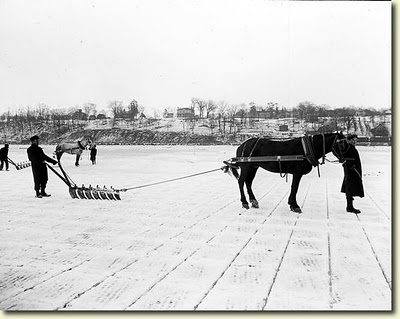
On Saturday, the groundhog did not see its shadow, and we're celebrating the end of subzero temperatures and reveling in temperatures in the 40s and 50s. We are also being warned about ice jams on rivers and streams and the potential for flooding as the dramatic change in temperature melts the ice.


A hundred years ago, the groundhog did see his shadow, which was considered a propitious sign, particularly for those who made a living harvesting ice on the Hudson River. The following item appeared on the front page of the Columbia Republican for February 4, 1919.
  
COPYRIGHT 2019 CAROLE OSTERINK

Sunday, February 3, 2019

Meetings of Interest in the Week Ahead

Yesterday, the groundhog predicted an early spring, and the anticipated temperatures for the week ahead are climbing into the 40s. A perfect week for a couple of nongovernmental meetings that look forward to warmer days.
  • On Monday, February 4, the Friends of the Hudson City Cemetery will hold a planning meeting from 6 to 8 p.m. in the Community Room of the Hudson Area Library, 51 North Fifth Street. 
This meeting, which was originally scheduled for Tuesday, January 29, will follow up on issues discussed at the group's inaugural meeting: events and fundraisers; monument cleaning day; listing in the National Register of Historic Places; condition survey.
  • On Tuesday, February 5, the Tourism Board will hold a special meeting at 5:30 p.m. at 1 North Front Street to discuss the eight proposals it has received to help develop "a tourism branding and marketing strategy that encompasses strategic research and analysis, development of a competitive identity, brand strategy and marketing strategy." The goal of the discussion is to determine which of the eight groups or individuals that submitted proposals--Van Slyke Strategic Consulting, John Isaacs, Steve Chandler, BBG&G, Fifteen Degrees, Blass Marketing, Adworkshop, and New Design Group--the board would like to invite in to make a presentation. NOTE: This meeting has been canceled.
Photo: Julien Capmeil|CH Traveller
Also on Tuesday, February 5, the Conservation Advisory Council meets at 6:00 p.m. at City Hall. The public comment period on the draft Open Space and Natural Resources Inventory ended on February 1, and it is likely those comments will be discussed at the meeting. 
  • On Wednesday, February 6, two Common Council committee meetings take place at City Hall: the Youth, Education, Seniors, and Recreation Committee meets 5:30 p.m., and the Housing and Transportation Committee meets at 6:45 p.m. No agenda is available for either meeting, but it has been announced that the Hudson Housing Authority will be making a presentation about the RAD conversion, the two buildings proposed to be constructed on State Street across from Bliss Towers, and the exterior renovations proposed for Bliss Towers.
  • On Thursday, February 7, the exhibition Oakdale: Past and Future, a collaborative creation of Friends of Oakdale Lake, Friends of Hudson Youth, the Hudson Area Library, Columbia University's Hudson Valley Initiative, and the City of Hudson Youth Department's "Oakdale campers," opens in the Community Room of the Hudson Area Library, 51 North Fifth Street. The opening event, which will include a short video of the Hudson Valley Initiative's findings and final design concept for Oakdale, takes place from 6 to 8 p.m. 
PhotobyGibson.com
  • On Friday, February 8, the Historic Preservation Commission holds the first of its two regular monthly meetings at 10 a.m. at City Hall.
COPYRIGHT 2019 CAROLE OSTERINK

Saturday, February 2, 2019

The News We Needed to Hear

Half an hour ago, Punxsutawney Phil predicted an early spring.


It's still below zero, but the temperature is expected to reach 30 degrees today, and Weather.com is predicting temperatures in the 50s on Tuesday.
COPYRIGHT 2019 CAROLE OSTERINK

A Building with a Past

I thought I knew almost everything there was to know about this building located at 216-220 Warren Street, part of which is now undergoing renovation to become a boutique hotel.


I knew that the building was originally constructed in the late 18th century as the residence of Thomas Jenkins, said to be the richest of the Proprietors, the founders of Hudson. I knew that when Thomas Jenkins died in 1808, at the age of 67, his brother Elisha, who inherited the house, divided it into two houses, and Thomas's widow lived in the east half.

I knew that in 1848 Elizabeth and Sophia Peake established the Hudson Seminary for Young Ladies in the west half of the building. I knew that in 1881 George Power, the richest man in Hudson in his time, moved into the east half of the house. I knew that in 1894 the west half of the building became a hotel called Graceland, and I knew that sometime in the 20th century the name was changed to Howard Hotel and remained so until 1944.

But it wasn't until I discovered this little item in the Columbia Republican for January 28, 1919, that I knew when the building transitioned from being Graceland to being the Howard Hotel or that it was ever claimed the eighth president of the United States had lived in the house.

COPYRIGHT 2019 CAROLE OSTERINK

Friday, February 1, 2019

In Memoriam: Al Cook

Yesterday, Al Cook died. I knew him, of course, as did most folks who have lived in Hudson for a while, but not as well as others and not well enough to feel confident about writing a tribute to him. So, I asked Peter Meyer, who was his neighbor for three decades, if he would do so. To accompany Peter's remembrance, I offer this image, a screen capture from the 2006 documentary Two Square Miles, which shows Al at City Hall, grilling the Common Council.

Hudson lost one of its iron men yesterday. Albert R. "Cookie" Cook passed away at the home of his daughter Cathy and her husband, Tim McGlauflin, in Coeymans Hollow, five days before his 89th birthday. 
A former union leader at one of Hudson's cement plants, Cookie was later known as the unofficial mayor of Partition Street for his welcoming conversations with friends both on his Union Street front porch, often shared with his wife, Joan, and in his garage on Partition Street, where motorists stopped at all hours, night and day, to shoot the breeze about the day's events. Cookie had an eclectic collection of everything from old movie posters and records to old snowblowers and tools. From both venues, he dispatched opinions on politics and current events, local and national. He made frequent appearances in City Hall to fight such matters as having to pay water and sewer bills for a vacant apartment and poor drainage along his garage. To the surprise of many, Cookie was a vocal opponent of the proposed St. Lawrence Cement Plant.
Friends will remember him as a hard worker with a heart of gold. He will be missed.
                                                     --Peter Meyer

The door of Cookie's garage on Partition Street
COPYRIGHT 2019 CAROLE OSTERINK